
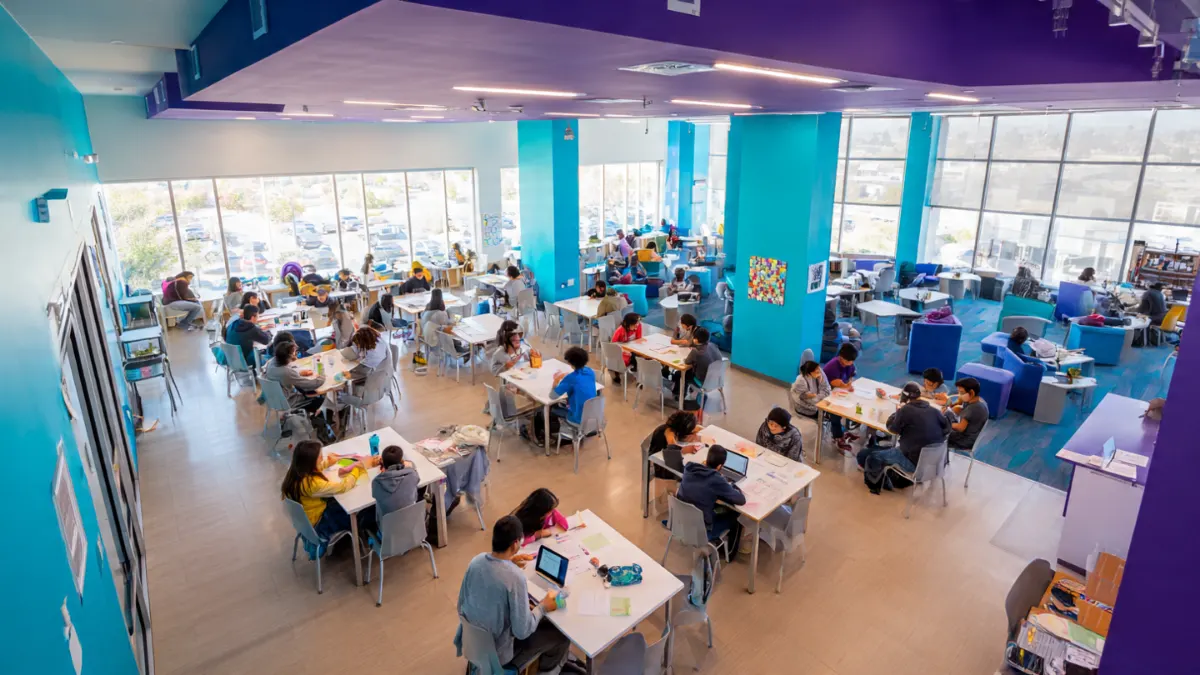
For Tri-Valley families, choosing a tutoring program can feel overwhelming. Dublin, Pleasanton, and San Ramon have a high concentration of academic enrichment options — from large national chains to independent tutors — and the differences between them aren't always obvious from a website or a first visit.
This guide helps parents in Dublin and the surrounding Tri-Valley area understand what separates one type of program from another, what questions to ask before enrolling, and how to match the right program to what your child actually needs.
How should parents compare middle school and high school tutoring in Dublin?
Many families search for the best middle school or high school tutoring in Dublin, CA, but the right choice depends on the student's stage. Middle school students often need help with fractions, ratios, equations, reading stamina, writing structure, and the transition into Integrated Math. High school students usually need course-specific support in Algebra, Geometry, Integrated Math, Precalculus, or SAT/PSAT preparation.
For middle school students, ask whether the program can explain the exact skill gap behind the struggle and whether it understands the Integrated Math pathway used across many Tri-Valley schools. GrowWise offers middle school math tutoring, English and writing support, and summer IM Get Ready cohorts for students preparing for the next math level.
For high school students, ask whether tutoring is tied to the current course, upcoming tests, finals, and college-readiness goals. GrowWise supports high school math tutoring, Integrated Math 1 tutoring, and SAT prep in Dublin, CA from the same diagnostic-first model.
What are the three types of tutoring programs in the Tri-Valley?
Most tutoring options in the Dublin area fall into one of three categories. Understanding which type you're looking at before you enroll saves time, money, and frustration.
Type 1: Worksheet and Repetition Programs
These programs follow a fixed curriculum sequence. Every student works through the same materials in the same order, at their own pace. Progress is measured by completing levels.
Best for: Students who need consistent reinforcement of foundational skills at a predictable pace.
Watch for:The pace is set by the program, not the student's actual gaps. A child who struggles with one specific concept may move forward before it's resolved.
Type 2: Homework Help and Subject Tutoring
These programs match students with tutors for session-by-session help on current assignments, upcoming tests, or specific topics. Sessions are usually flexible and reactive to what's happening in school that week.
Best for: Students with strong foundational skills who need occasional support on specific topics.
Watch for:Homework help is reactive by design — it doesn't identify or close underlying gaps. If the real issue is a foundational gap from an earlier grade, homework help won't surface it.
Type 3: Diagnostic-First Programs
These programs start with an assessment to identify where the student actually is — not where their grade level says they should be — before building a plan. Sessions are targeted to close specific identified gaps.
Best for: Students with identifiable patterns (careless mistakes, specific subject struggles, upcoming SAT prep) where the root cause matters.
Watch for:Quality varies significantly. A program that calls itself “diagnostic” should produce a written plan with specific identified gaps, not just a general placement level.
What questions should parents ask before enrolling?
Regardless of which program type you're considering, these questions surface important differences.
- Do you run a diagnostic before starting — and what does it tell you? A meaningful diagnostic identifies wherein a skill the gap exists, not just that a gap exists. “Your child is at a Grade 4 math level” is a placement, not a diagnosis. “Your child understands multiplication but has a consistent error in multi-digit addition that's affecting algebra” is a diagnosis.
- How is my child's plan different from another child's plan?If the answer is “they work through the same materials at different paces,” that's a repetition program. If the answer involves specific identified gaps and a targeted sequence, that's diagnostic-first.
- What happens if my child doesn't improve?A good program can explain specifically what they're measuring and how they'll adjust the approach if progress stalls. “We'll keep working with them” is not an answer.
- How do you align with what they're learning in school right now?For Dublin and Tri-Valley families, the ability to connect tutoring sessions to current school content — pacing, upcoming assessments, unit tests — is a significant differentiator. A program that teaches independently of school curriculum may produce results that don't show up in grades.
- What's the class or session size? The difference between 1:1 and a group of 10 is significant. Research shows 1:1 instruction achieves in approximately 20 hours what takes 40–60 hours in larger group settings.
What should Dublin and Tri-Valley parents know?
Tri-Valley schools are academically demanding.
Dublin Unified, Pleasanton Unified, and San Ramon Valley Unified all serve high-achieving student populations with competitive academic expectations. The bar for what “keeping up” means is higher here than in many other districts.
This matters for tutoring because programs designed for average academic environments may not move fast enough for Tri-Valley students who need to stay at grade level in accelerated contexts.
Integrated Math matters here.
California's Integrated Math 1, 2, and 3 pathway — used in many Tri-Valley schools — combines algebra, geometry, and statistics across three years rather than teaching them as separate courses. Not every tutoring program has tutors familiar with this structure. It's worth asking specifically.
GrowWise offers year-round Integrated Math 1 tutoring and summer IM Get Ready programs aligned to the Tri-Valley IM pathway.
Summer programs fill quickly.
Academic summer programs in Dublin — get-ready cohorts, reading and writing sprints, and math foundations — typically fill weeks before summer starts. STEAM coding camps fill on a similar timeline. If summer academic programming is on your radar, the right time to look is late winter/early spring.
What does GrowWise offer Dublin families?
GrowWise is located at 4564 Dublin Blvd, Dublin, CA 94568 — serving families from Dublin, Pleasanton, San Ramon, and Livermore. Visit our Dublin center page for directions, hours, and program details.
Academic programs (Grades 3–12): Math Tutoring · English & Writing · High School Math · SAT/PSAT Preparation
STEAM and coding programs (Ages 10–18): Python & AI · Game Development (Roblox, Scratch, Unity) · Robotics
Summer programs: Academic summer hub · Reading & Writing Sprint · Math Foundations · Algebra 1 Get Ready · Geometry Get Ready · IM1 Get Ready · IM2 Get Ready · STEAM Coding Camps
What makes our approach different: Every student starts with a free academic assessment. We identify the specific mistake pattern or skill gap before recommending any program. We align sessions to current school curriculum — not a separate sequence.
Small groups (max 8 students) and 1:1 sessions are both available. Live online sessions are also available for families who can't make it to Dublin in person.
- In-person: 4564 Dublin Blvd, Dublin, CA 94568
- Phone: (925) 456-4606
- Email: contact@growwiseschool.org
- Online: Available nationwide
Book a Free In-Person or Online Assessment → · View All Programs →
When should parents start looking?
For school-year support:The best time to start is before a student falls significantly behind. If you're noticing patterns — consistent low scores on a specific subject, homework resistance, careless mistakes on tests — those patterns get easier to address earlier.
For SAT prep: Grade 10 is the recommended starting point. Grade 11 is workable. Grade 12 is compressed. See our guide on when to start SAT prep for more detail.
For summer programs: Start looking in March/April. Browse Dublin academic summer programs — spots fill quickly.
Not sure which program fits your child?
Book a free assessment at our Dublin center — or online. We identify the specific gap before recommending anything.