
Learning is not a service you purchase. It is a partnership, and most families are only staffing one side of it.
A piano teacher sees a student for one hour every week. Nobody expects that single hour to create a concert pianist. Practice between lessons creates the musician. Yet somehow, many parents expect one or two hours of tutoring to erase years of inconsistent habits.
Tutoring is treated, quietly, as an outsourcing decision. Hire the right person, and the problem gets solved. But a tutor is one hour a week. A teacher is a shared classroom with thirty other students. The other 166 hours belong to the student and the family.
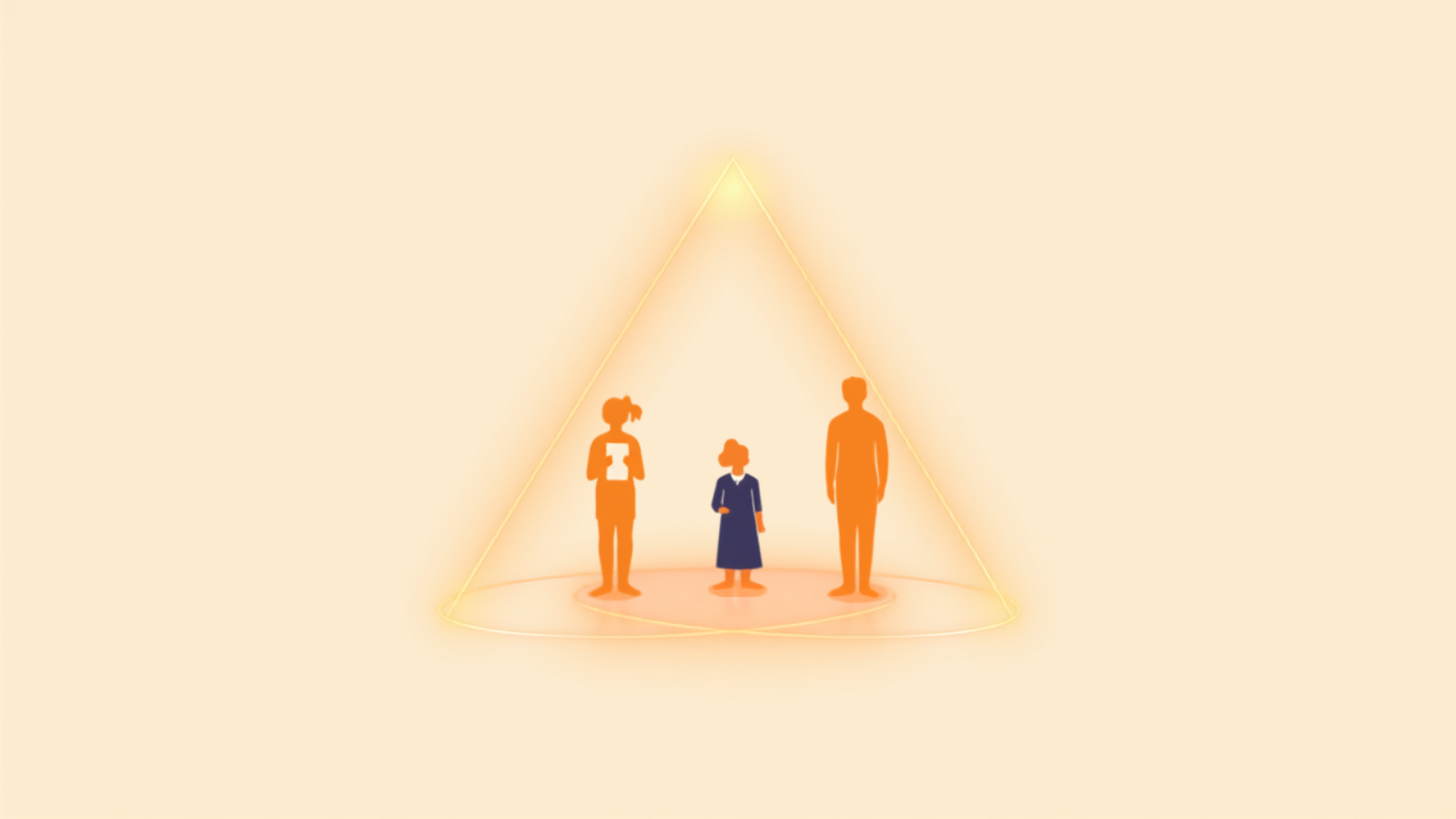
The learning triangle
Picture a triangle with three points: teacher, student, and parent. Each point holds up a different part of the structure. The teacher delivers instruction and expertise. The student does the actual thinking, practicing, and retrieving. The parent builds the conditions around both, the sleep, the routine, the encouragement, the follow-through.
A triangle with only two points is not a weaker triangle. It is not a triangle at all. Remove the parent side, and even excellent teaching has nowhere consistent to land. Remove the student's effort, and no amount of instruction converts into learning. Remove quality teaching, and a motivated student with a great home routine still lacks the expertise to move forward efficiently.
What actually determines whether learning sticks
Five factors decide whether an hour of instruction turns into real progress: attention, motivation, sleep, practice, and feedback. None of these live inside the tutoring session. All of them live in the hours around it.
A child who is exhausted cannot hold new information regardless of how well it is taught. A child who never practices between sessions forgets by the following week. A child who gets no feedback on daily work repeats the same mistakes undisturbed. These are not tutoring problems. They are triangle problems.
This is why two students with the same tutor, the same curriculum, and the same starting point often end up in very different places by the end of a semester. The difference is rarely the instruction. It is almost always what happens on the other two sides of the triangle.
Why we expect teachers to solve problems that start earlier
Teachers and tutors are often handed a problem that began long before the lesson started: a child who has not slept enough, has no consistent homework routine, or has quietly decided they are "not a math person." Instruction can address the content gap. It cannot, on its own, rebuild a sleep schedule or a study routine.
In Dublin, Pleasanton, and San Ramon, where families often invest heavily in tutoring the moment a grade dips, this gets missed constantly. The tutor gets blamed, or replaced, when the actual gap is on the parent side of the triangle: no consistent time for homework, inconsistent sleep, or no follow-through between sessions.
What parents can actually do
Not more tutoring hours. A consistent time and place for homework. A protected bedtime, even when the week gets busy. A five-minute check-in that asks what was learned, not just whether homework is done. These do not require expertise. They require consistency, and consistency is entirely within a parent's control.
Not sure which side of the triangle is missing? GrowWise's free parent self-check looks at habits and routines, not just test scores.
Start the Free Self-CheckFor more on why grades alone do not reveal the real problem, see our guide on what a B+ actually hides.
Learning is not something you outsource to one hour a week.
It is a triangle. All three sides have to hold.
Want a plan that covers all three sides?
GrowWise School runs small-group math and English programs for students in Grades 3–12 in Dublin, CA, paired with practical guidance for the routine side of learning, not just the instruction side.
GrowWise School runs small-group academic programs for students in Grades 3–12 in Dublin, CA. Learn more at growwiseschool.org.
Frequently asked questions about the teacher-student-parent learning triangle
Parent questions we hear in Tri-Valley. Tap to expand.
More for Tri-Valley families: GrowWise blog · Free math self-check